
Your yard is a better place to put heat than your driveway.
In August, an ordinary air conditioner takes the heat out of your house and pushes it into 95-degree air. A geothermal system pushes it into the ground, which is holding somewhere in the low sixties year-round. That difference is the entire idea, and it's why these systems cost less to run than anything else you can put in a house.

How it works.
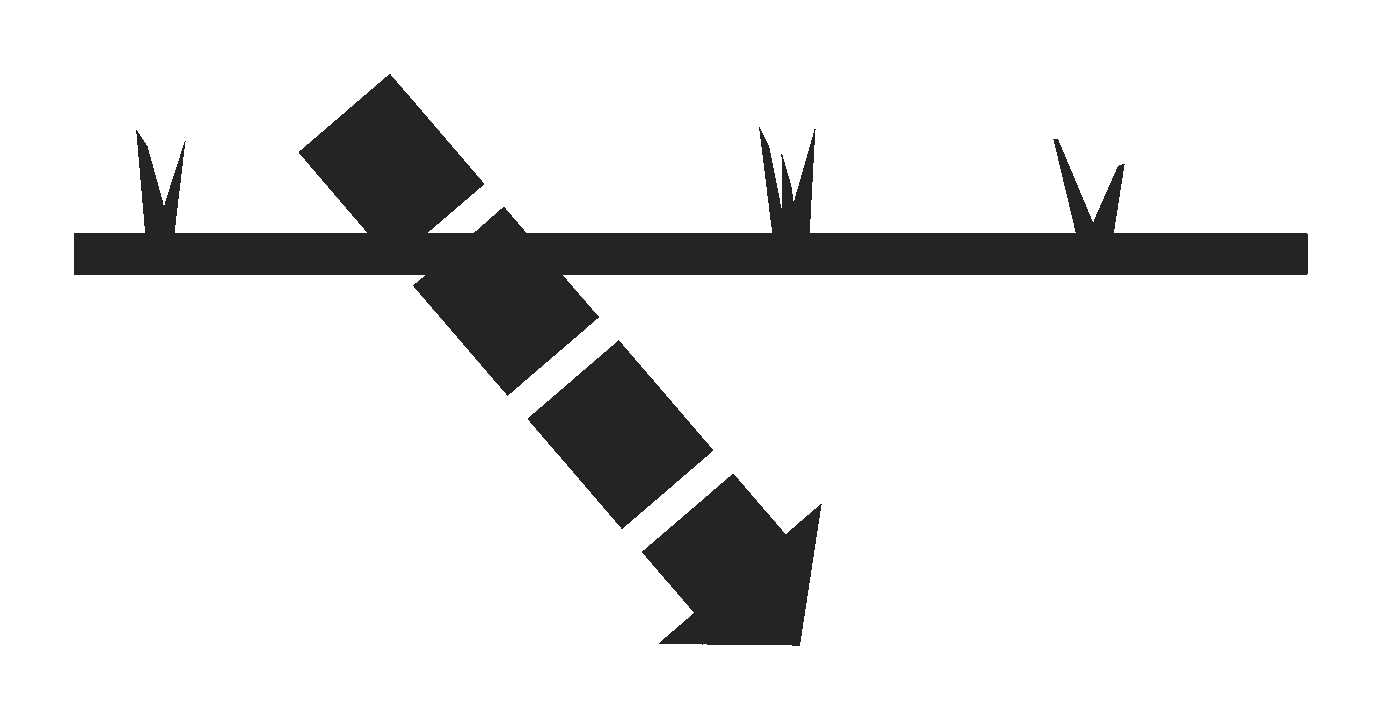
A loop of buried pipe circulates water through the ground beneath your property. Indoors, a heat pump moves heat between that loop and your air — pulling it out of the ground in January, putting it back into the ground in July. Nothing burns. There's no flame, no flue, no gas line, and no outdoor unit.
The loop goes in once. Depending on the lot, it goes down in vertical bores, out in horizontal trenches, under a driveway by directional bore, or into a pond if you have one. Which one depends on how much land you have and what's under it.



What it costs to run.
Every heating and cooling system is in the business of moving heat from where you don't want it to where you don't mind it. Everything else being equal, moving heat into sixty-degree ground takes less electricity than moving it into ninety-five-degree air — and the gap is widest in exactly the weeks when your bill is worst.
The flip side is honest: the loop makes geothermal cost more to install than a conventional system, because somebody has to drill. The system pays that back out of the operating difference, and how fast depends on your rates, your house, and your lot. Any contractor worth hiring will model that for your specific house rather than quote you a national average.
What lasts, and for how long.
The buried loop is the longest-lived part of the system. It's HDPE pipe with no moving parts, nothing exposed to weather, and nothing for a hailstorm or a lawnmower or a salt breeze to find. GeoComfort puts the equipment at up to twenty-five years and says the buried loop fields stay viable for generations. The indoor unit is serviceable like any heat pump, and it lives indoors — which is the single biggest reason geothermal equipment tends to outlast the thing it replaced.
Nothing sits outside. On the coast that matters more than anywhere — salt air is why the twenty-five homes at Seaside Retreat on Jekyll Island went geothermal instead of putting condensers on an oceanfront lot.
What about tax credits and rebates.
Straight answer: the 30% federal residential geothermal tax credit ended for systems placed in service after December 31, 2025. If you read somewhere that geothermal comes with a 30% federal credit, that page hasn't been updated.
What's left is state-administered and utility-level, some of it income-qualified, and it varies by where you are and who sells you power. It changes often enough that we won't print a number here and let it go stale. A contractor in our network will know what's current in your utility territory — that's part of why it's worth talking to one.
The more useful answer is that most people don't pay for a geothermal system out of pocket either way. Enertech Finance, through Regions Bank, lends against the system rather than your house — your equity isn't collateral, there's no prepayment penalty, and there are terms that let the energy savings cover the payment while you're still paying it off. It's available through approved GeoComfort installers. Ask them to walk you through it.
Is my house a candidate?
Geothermal is easiest on a new build, where the loop goes in before the landscaping. It's very doable on an existing house with land around it. It gets harder on a small lot, and the ductwork you already have matters.
The only way to know is to have someone look at the property. That isn't us — we supply the equipment, and the contractors we supply do the looking. Ask them what a site evaluation involves and what it costs, because it varies by company.